Wednesday, April 10, 2019

Andrew on S. Mary-le-Bow

S. Mary-le-Bow, London (Andrew Hartman)


· St. Mary-le-Bow
o History
§ Records indicate church had be previously destroyed in 1091 by tornado
· One of the first recorded and worst tornadoes of Great Britain
· Archeological evidence indicates it existed long before then
§ Destroyed again in 1666 by the Great Fire of London.
· Rebuilt in 1680 by Christopher Wren in the Baroque style
o Best known for St. Paul’s Cathedral
§ Finished in 1710
o Believed St. Mary-le-Bow was second only to St. Paul’s
· Masonry by Thomas Cartwright
§ Destroyed again in 1941 by German bombing during The Blitz
· Rebuilt in 1956
o Novelty
§ 12 Bells
· Prominent part in Dick Wittington and His Cat
· Nursery rhyme “Oranges and Lemons”
· According to tradition, a true Cockney Londoner must be born within earshot of the sound

http://in360degrees.co.uk/wrenchurches/data/008StMaryLeBow/

Dawson on George I

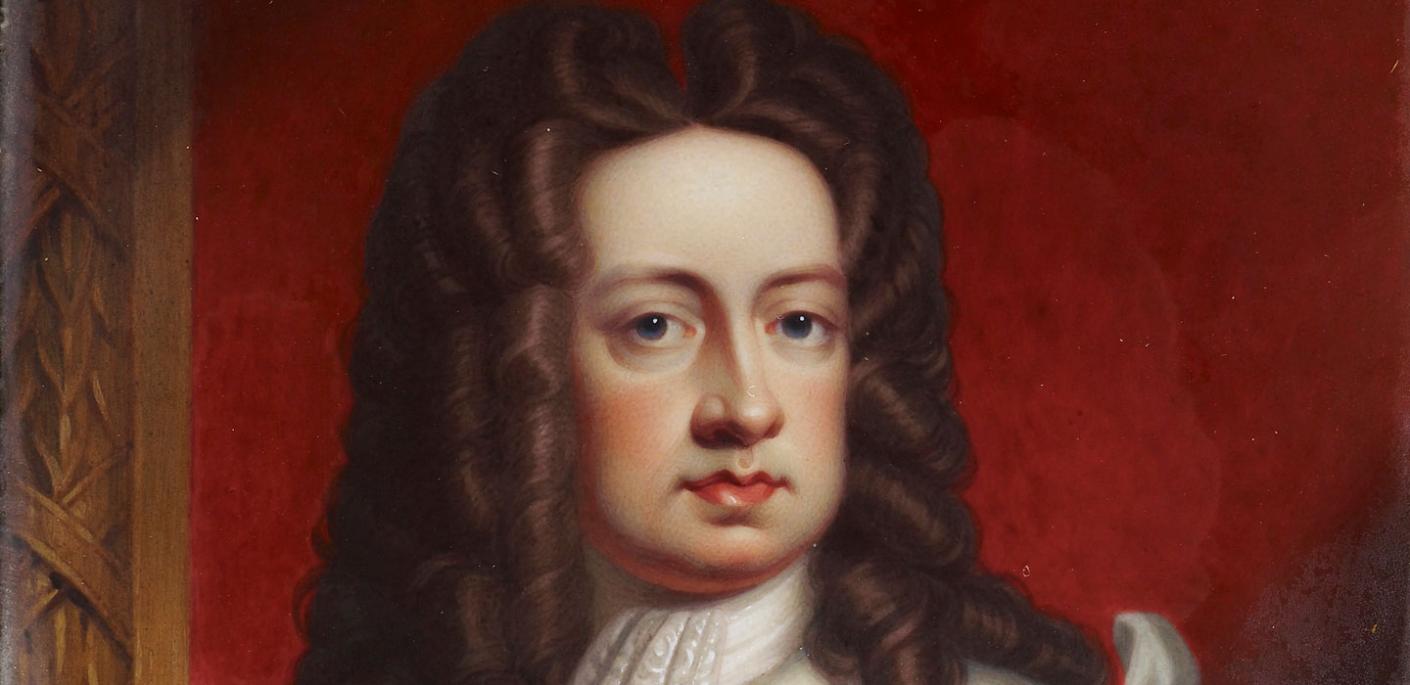
George I (1714-27) (Dawson Furnish)


Born on May 28, 1660, in Osnabruck Hanover, Germany, George Ludwig or George Louis was the son of Ernest Augustus and Sophia Stuart. Ernest Augustus was the elector of Hanover, and Sophia was the granddaughter of King James I of England. George was raised to be the heir of his father which meant he was given a prestigious education and trained to be a noble. George later married his cousin, Sophia Dorothea, in 1682 and had two children with her; one of the children would grow up to be George’s heir, King George II of England. George’s marriage did not last long since he had accused his wife of infidelity, divorced her, and locked her up. He eventually took his father’s place as elector of Hanover in 1698. During this time, England was currently trying to rid the throne of Catholics and replace them with good old Protestant rulers. This plan lead English Parliament to form Act of Settlement in 1701. Act of Settlement made it so Parliament could regulate the succession of the crown causing them to decide that the next heir, after Princess Anne, of the throne would be Sophia instead of James Edward. During Anne’s rule, George was busy fighting in the War of the Spanish Succession against the French. This made him look even better to England’s politicians. Both Anne and Sophia died in 1714 which would leave the throne open for George to claim all to himself and was brought into England by the Whigs. George knew he would not have as much freedom to rule as he did in Hanover which resulted in him to not learn the English language. Right when George was thrown into the throne, He was tasked with suppressing the Jacobite rebellions just a year later and in 1719. Once the rebellions were taken care of, George would go back and forth from England to Hanover leaving much of his work to his prime minister, Walpole. Walpole would be the one responsible to later deal with the 1720 stock market crash guiding the government back to financial stability. Over the years, George would become less and less popular with his subjects due to him spending more and more time in Hanover where he would eventually die of a stroke in 1727.
Works Cited
Britannica, The Editors of Encyclopaedia. “George I.” Encyclopaedia Britannica, Encyclopaedia


Tuesday, April 2, 2019

Vanessa on the Seven Years' War or French and Indian War

The Seven Years' War or French and Indian War (Vanessa Gibson)


The Seven Years' War was the last major European conflict before the French Revolution in 1789 and easily could have been deemed the first world war since many of the major powers of Europe were involved. The actual war in Europe began in 1756 when Frederick the Great of Prussia invaded the Holy Roman Imperial state, Saxony. This entangled the alliance of France, Russia, Sweden, Austria, and Saxony against Prussia, Hanover, and Great Britain. One interesting element of the Seven Years' War was the international conflict between France and Great Britain, as many of their battles took place offshore or at colonized bases as they fought for dominance in North America and India.

During the first year of fighting, the British suffered a number of defeats against the French and the French's Native American allies. It wasn't until the newly appointed British Prime Minister William Pitt re-strategized the fight with France. It was in his mind that the best way to defeat the French army was to avoid mainland France and focus instead on its lesser defended colonies. His plan was twofold. First, in order to protect the German state of Hanover, which was under the same crown as Great Britain, Pitt invested money into his Prussian allies whose armies had the capability to stand up against France's. Confident in the abilities of the British Navy, the second part of his plan was to then open additional fronts across the globe in order to overextend the French. Britain’s Navy was victorious in many global maritime invasions, enabling them to make colonial conquests in North America, the West Indies, and West Africa. The British continued to prevail in their battles against France, capturing the major French base, Pondicherry in India in 1761. Two years after France's defeats in India, the war ended with the signing of the treaties of Hubertusburg and Paris in February of 1763. In the signing of the Treaty of Paris, France lost all claims to Canada and gave Louisiana to Spain. In contrast, Britain received Spanish Florida, upper holds of Canada, and other various French holdings overseas. Thus, Britain took over France's claim as the most dominant world power. However, from the extent of the war, both countries faced economic struggle and debt. Ultimately Britain's economic position would lead to the American Revolutionary War and likewise, France's loss and economic struggles would be a catapult for their revolution.


Sources:

History.com Editors. "Seven Years' War." History.com. November 12, 2009, https://www.history.com/topics/france/seven-years-war. Accessed April 2, 2019.
History.com Editors. "The Seven Years War begins." History.com. March 3, 2010, https://www.history.com/this-day-in-history/t

Monday, April 1, 2019

Emily on Moll Davis


Moll Davis (Emily Masterson)

                          “Moll Davis.” Wikipedia, Wikimedia Foundation, 28 Sept. 2018,

                                   en.wikipedia.org/wiki/Moll_Davis.


Molly Davis, also known as Moll Davis, was one of the mistresses of King Charles II. She was born in 1648 in Westminster. She was said by Samuel Pepys, a famous diarist, to be “a bastard of Collonell Howard” She was a singer, dancer, and comedian who became an actress in the Duke’s Theatre Company in the early 1660s. She and the king met in a coffee house or a theatre around 1667. She was known for being very greedy, and she liked to show off her expensive jewelry. Somewhere between 1668 and 1673, Davis had a daughter to King Charles II and named her Lady Mary Tudor. Davis’s daughter also became famous on her own. None of the websites that I found go into detail about what she was famous for, but she passed away in 1726. Not long after Mary Tudor was born, King Charles II ended things with Moll Davis. Nobody knows exactly why, but there are rumors that it had something to do with Nell Gwyn who happened to be competing with her for affection from the King. It has been said that Nell Gwyn thought that Moll Davis was devious and only using the King for his money. When the King left her, he decided to give her a large sum of annual money for life. King Charles II also bought her a house. Four to five years later, in October of 1673, Moll Davis bought a new house. In Saint James’s Square. In December 1686, Moll Davis married a man named James Paisible who was a French musician and composer. In 1708, Moll Davis died. I could not find how she died anywhere.


Works Cited
Revolvy, LLC. “‘Moll Davis’ on Revolvy.com.” Revolvy, www.revolvy.com/page/Moll-Davis.

“Encyclopedia.” The Diary of Samuel Pepys, www.pepysdiary.com/encyclopedia/9899/.

“Mistresses of King Charles II: Moll Davis.” Stuarts Weekly, 8 July 2016,
stuartsweekly.wordpress.com/2016/06/17/mistresses-of-king-charles-ii-moll-davis/.

Wednesday, March 27, 2019

Jane on Phyllis Wheatley

Phyllis Wheatley  (Jane Wilson)


Phillis Wheatley was born in Senegal/Gambia, West Africa in 1753. After being kidnapped from her home in West Africa when she was seven or eight years old; a slave ship brought her to Boston in 1761. John Wheatley, a prosperous tailor and his wife, Susanna, purchased the young girl directly from the ship and named her Phillis Wheatley (Phillis was the name of the ship that brought her to the New World). At the time of the purchase, The Wheatleys’ had no clue of the talents she would soon show the world. Phillis Wheatley became the first African American and one of the first women to publish a book of poetry in the colonies in 1773.


Monday, March 25, 2019

Alexa on John Locke


John Locke and the Enlightenment (Alexa Escamilla)

 The English philosopher and political theorist John Locke (1632-1704) laid much of the groundwork for the Enlightenment and made central contributions to the development of liberalism.


John Locke (1632–1704) is among the most influential political philosophers of the modern period. In the Two Treatises of Government, he defended the claim that men are by nature free and equal against claims that God had made all people naturally subject to a monarch. He argued that people have rights, such as the right to life, liberty, and property, that have a foundation independent of the laws of any particular society. Locke used the claim that men are naturally free and equal as part of the justification for understanding legitimate political government as the result of a social contract where people in the state of nature conditionally transfer some of their rights to the government in order to better ensure the stable, comfortable enjoyment of their lives, liberty, and property. Since governments exist by the consent of the people in order to protect the rights of the people and promote the public good, governments that fail to do so can be resisted and replaced with new governments. Locke is thus also important for his defense of the right of revolution. Locke also defends the principle of majority rule and the separation of legislative and executive powers. In the Letter Concerning Toleration, Locke denied that coercion should be used to bring people to (what the ruler believes is) the true religion and also denied that churches should have any coercive power over their members. Locke elaborated on these themes in his later political writings, such as the Second Letter on Toleration and Third Letter on Toleration.

With this being said Locke’s principles are against those of Dryden. Which involve more tradition views such as the primacy of the king, the doctrines of divine right and passive obedience.

Wednesday, March 20, 2019

Ella on the Jacobite Rising of 1715

The Jacobite Rising of 1715 (Ella Stettner)


Jacobite: a supporter of the exiled Stuart King James II who was replaced by William III and Mary II after the Glorious Revolution because, among other things, he was Roman Catholic. 
The Jacobites in England were devoted to trying to restore James II to the throne and they worked hard to do so especially under the rule of William and Mary.  The rebellion was particularly strong in Scotland, Wales, and Ireland, where it took on a particularly religious bent.  There were five attempts to restore James II over the following half a century; this presentation will focus on the third and first serious attempt.
The third attempt to restore James II is known as the 1715 rising, or the Fifteen Rebellion because it took place in 1715.  This date is significant because it was the year after Anne, the daughter of James died and was succeeded by George I, son of Queen Sophia of Hanover.  In 1715 there were two equally unsuccessful groups of Jacobites who attempted to carry out rebellions.  The first was led by the Earl of Mar, who launched a rebellion in the name of James VIII, the son of King James II who the Jacobites considered to be the legitimate ruler of Britain.  This rebellion initially had success, but it eventually met English troops led by the Duke of Argyle and was defeated in the Battle of Sheriffmuir.  The other rebellion was comprised of Highland supporters and Border Jacobites.  They also met English troops and were defeated after fighting for two days in the Battle of Preston.
One of the consequences of the First Jacobite Rebellion was that it made the government aware of the need to better manage the Scottish Highlands and break up some of the Jacobite groups.  They succeeded in building roads and forts across the area so that troops could more easily move through it.
As it relates to this class, many of the writers we have studied or will study secretly supported the Jacobite cause, including John Dryden and Aphra Behn.
After the final defeat of the last Jacobite rising in 1745, the cause largely died out and lived on only in sentiment.
Sources:
Greenblatt, Stephen. Introduction. The Norton Anthology of English Literature, 9th ed, vol. C, W.W. Norton, 2013, p. 2179.